Coil Academy / Maintenance
Commercial HVAC Coil Cleaning: Methods, Mistakes, and Maintenance
Understand what cleaning can restore, how coil construction changes the method, and what a complete maintenance visit should include.
In this article10 sections
What coil cleaning actually does
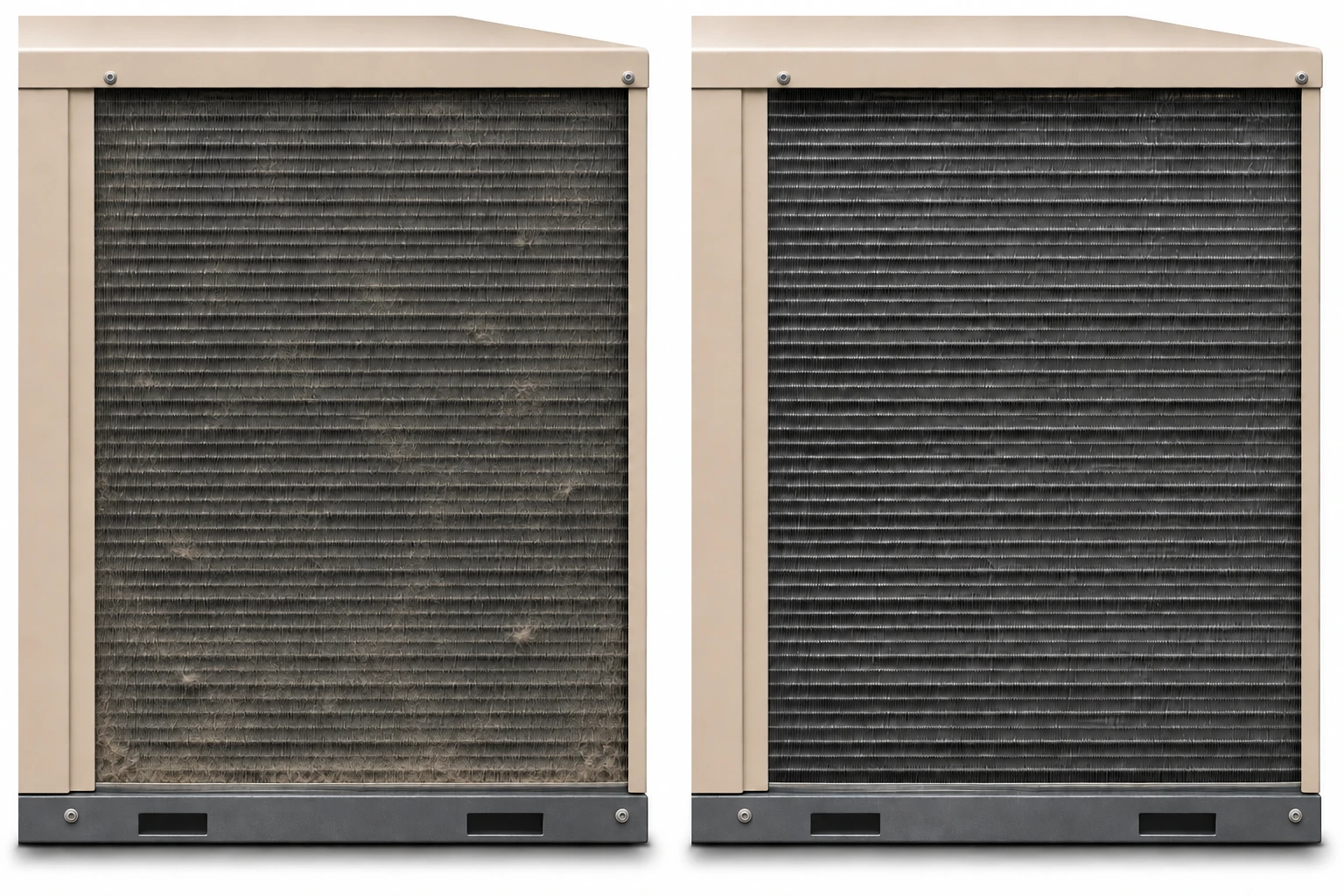
An HVAC coil transfers heat through metal surfaces. Air passes between the fins while refrigerant, water, or steam travels inside the coil. Dust, lint, leaves, and other deposits can obstruct those air passages and interfere with heat transfer.
Cleaning removes unwanted material from the air-side surfaces. It does not repair a refrigerant leak, reverse corrosion, replace missing fins, or establish that the coil is correctly sized for the system. A clean coil and a sound coil are different things.
Reduced cooling, higher energy use, icing, or poor airflow can justify an inspection, but none of those symptoms proves that dirt is the cause. Filters, fans, drainage, controls, and refrigeration conditions also need consideration.
Identify the coil before choosing a method
The name of the application is only the starting point. Two condenser coils may require different cleaning procedures because their materials, construction, coatings, or equipment arrangements differ.
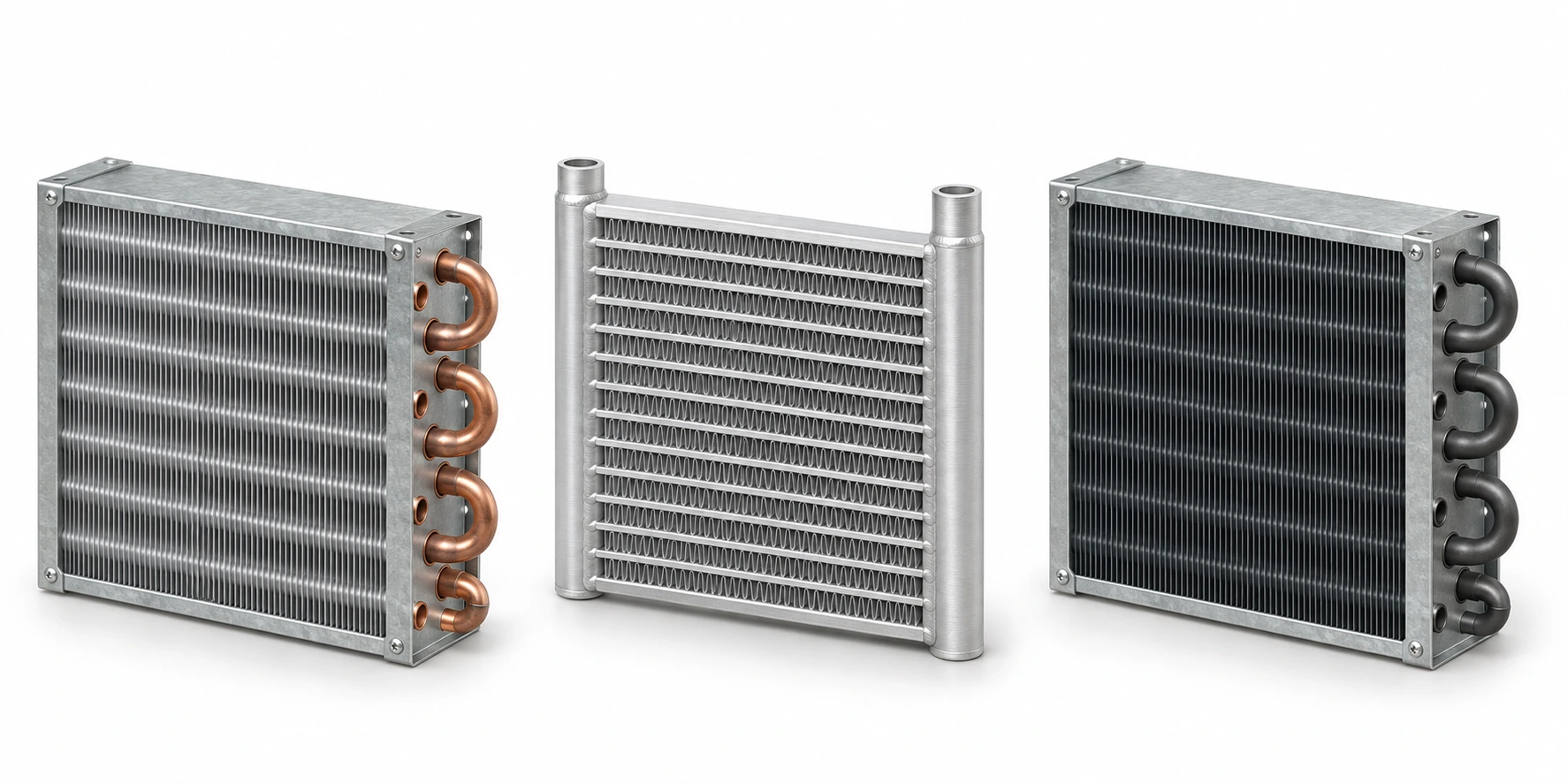
Conventional fin-and-tube coils
These coils have round tubes passing through closely spaced fins. They may be used for cooling, heat rejection, hot-water heating, steam heating, or reheat. Check the actual fin material and any protective coating; copper tubes do not mean that every exposed surface is copper.
Microchannel coils
Microchannel coils use flat tubes with small internal passages and fins between them. Some equipment manufacturers specify water-only cleaning and prohibit chemical coil cleaners. Do not apply a procedure intended for a conventional coil without checking the specific equipment instructions.
Coated coils
A protective coating adds another compatibility requirement. The coating supplier may specify approved products, separate salt-removal procedures, cleaning intervals, and maintenance records. An apparently gentle cleaner is not automatically approved for that finish.
Prepare the equipment and the work area
Commercial coil cleaning should be planned and carried out by qualified HVAC service personnel. Access, electrical isolation, chemical handling, and drainage are part of the job, not separate details to address after spraying begins.
Before cleaning or opening equipment, the service team should follow the manufacturer’s shutdown instructions and the site’s hazardous-energy control procedure, including verification of isolation. A thermostat set to “off” is not a substitute for verified isolation. Equipment may have more than one electrical supply. Hot-water and steam systems also require attention to hot surfaces and stored energy.
Confirm safe access, protect electrical components and nearby materials, and arrange collection and disposal of cleaning liquid according to the product instructions and site requirements. Use the protective equipment specified for the work and the cleaner. Coil fins and sheet-metal edges can be sharp.
A practical cleaning sequence
Inspect before disturbing the deposits
Record where contamination has accumulated, which side receives entering air, and whether both coil faces can be reached. Look for bent fins, damaged coatings, visible corrosion, and possible leaks. A heavy mat at the surface and contamination deeper in the coil may need different access and treatment.
Remove loose material first
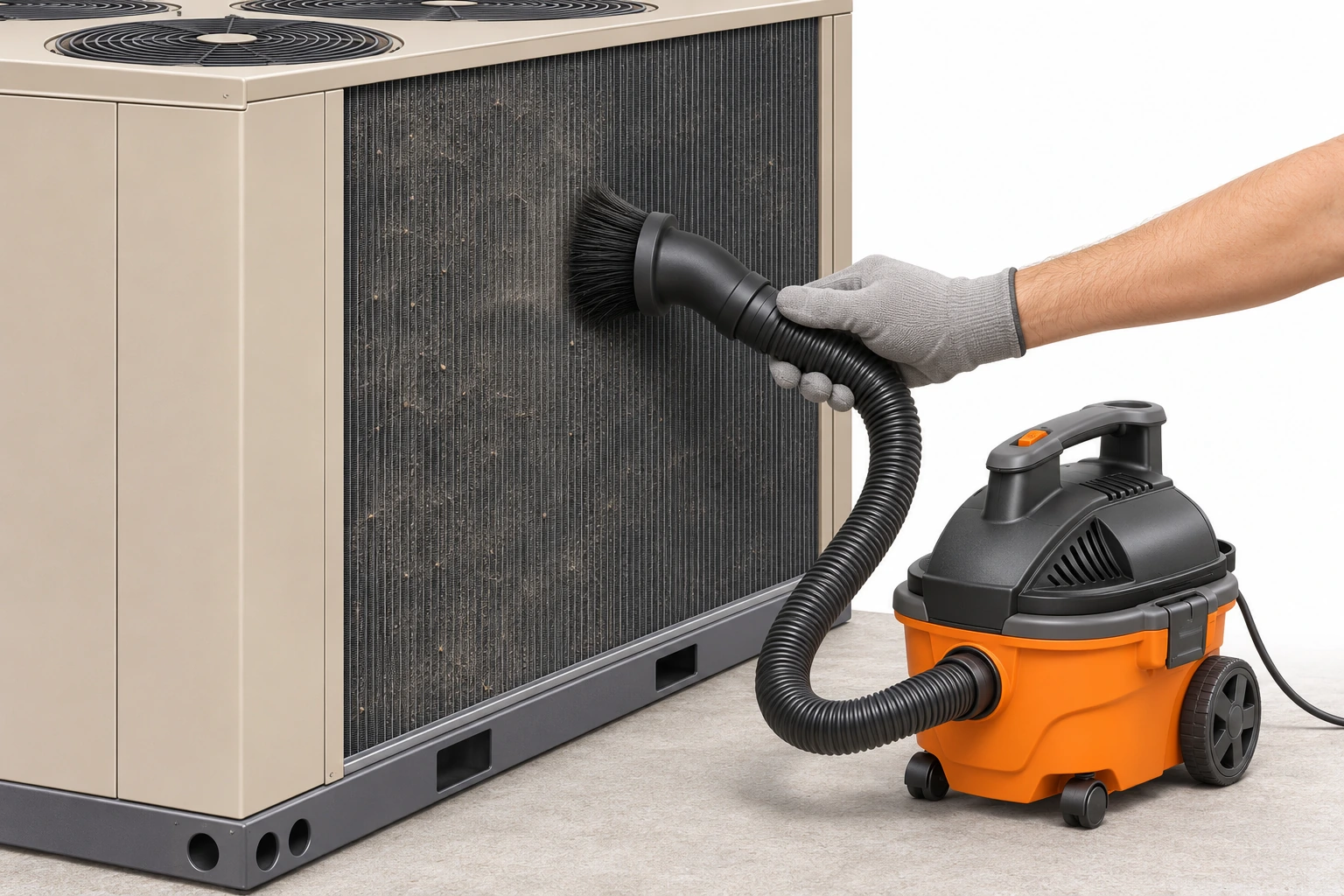
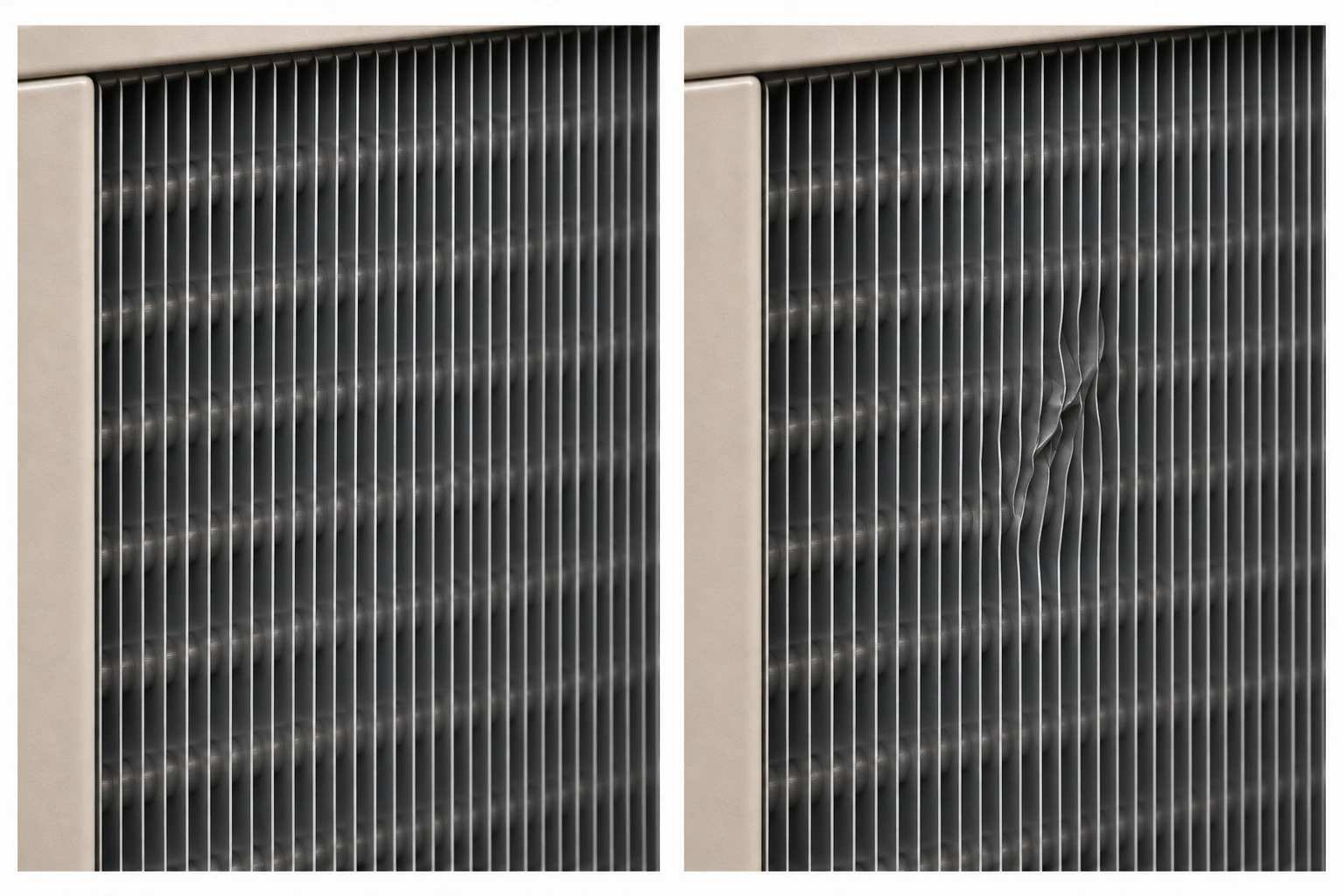
Where permitted by the equipment instructions, remove surface debris with a suitable vacuum attachment or a soft, nonmetallic brush. Avoid pressing tools into the fins. Brushing across thin fin edges can fold them over. Spraying directly into a surface mat can drive fibers deeper instead of removing them.
Clean using the approved procedure
Use the specified water-only method or approved cleaning product for that coil. If a cleaner is permitted, follow its required dilution, application, contact time, and rinsing instructions. More concentrate and a longer soak are not substitutes for the prescribed method. Do not mix cleaning chemicals.
Rinse and inspect again
When the procedure requires rinsing, use the permitted water quality, temperature, pressure, nozzle pattern, and working distance. Where access and the manufacturer allow, rinsing opposite the normal airflow direction can help move deposits back toward the surface where they entered. Keep water away from protected components.
Inspect the passages after cleaning. A cleaner-looking front face does not confirm that the entire coil depth is clear. Thick coils or tightly arranged coil banks may require additional access by the service team.
Pressure and cleaner selection: avoid universal rules
There is no single pressure setting or chemical suitable for every commercial coil. A method must account for the equipment instructions, fin and tube materials, coating, contamination, and access. A pressure limit from one manual is not a general permission for another unit.
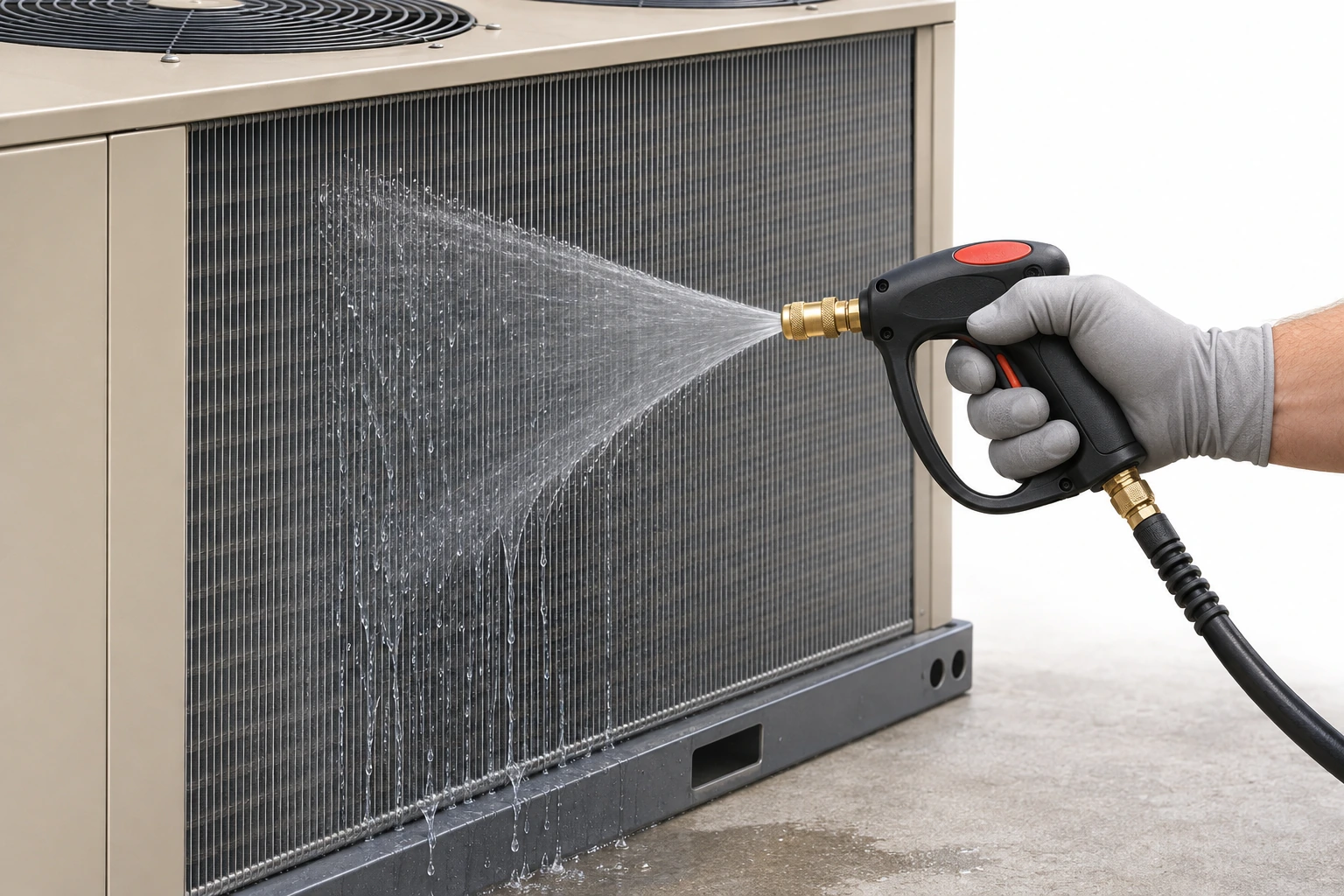
Avoid a concentrated high-pressure jet. It can bend fins and create new airflow restrictions. Several manufacturer procedures call for low-velocity water and discourage pressure washers. If the permitted limits are unavailable, obtain the instructions before selecting the cleaning method.
The same caution applies to compressed air. Some procedures permit controlled air cleaning; others prohibit high-speed air jets. It is not a universal alternative to water.
Do not choose a cleaner only because its label says “coil cleaner,” “foaming,” or “no rinse.” Confirm approval for the actual equipment, metals, coating, and indoor or outdoor application. A “no rinse” label does not override the equipment or coating instructions.
Indoor cooling coils need drainage checks too
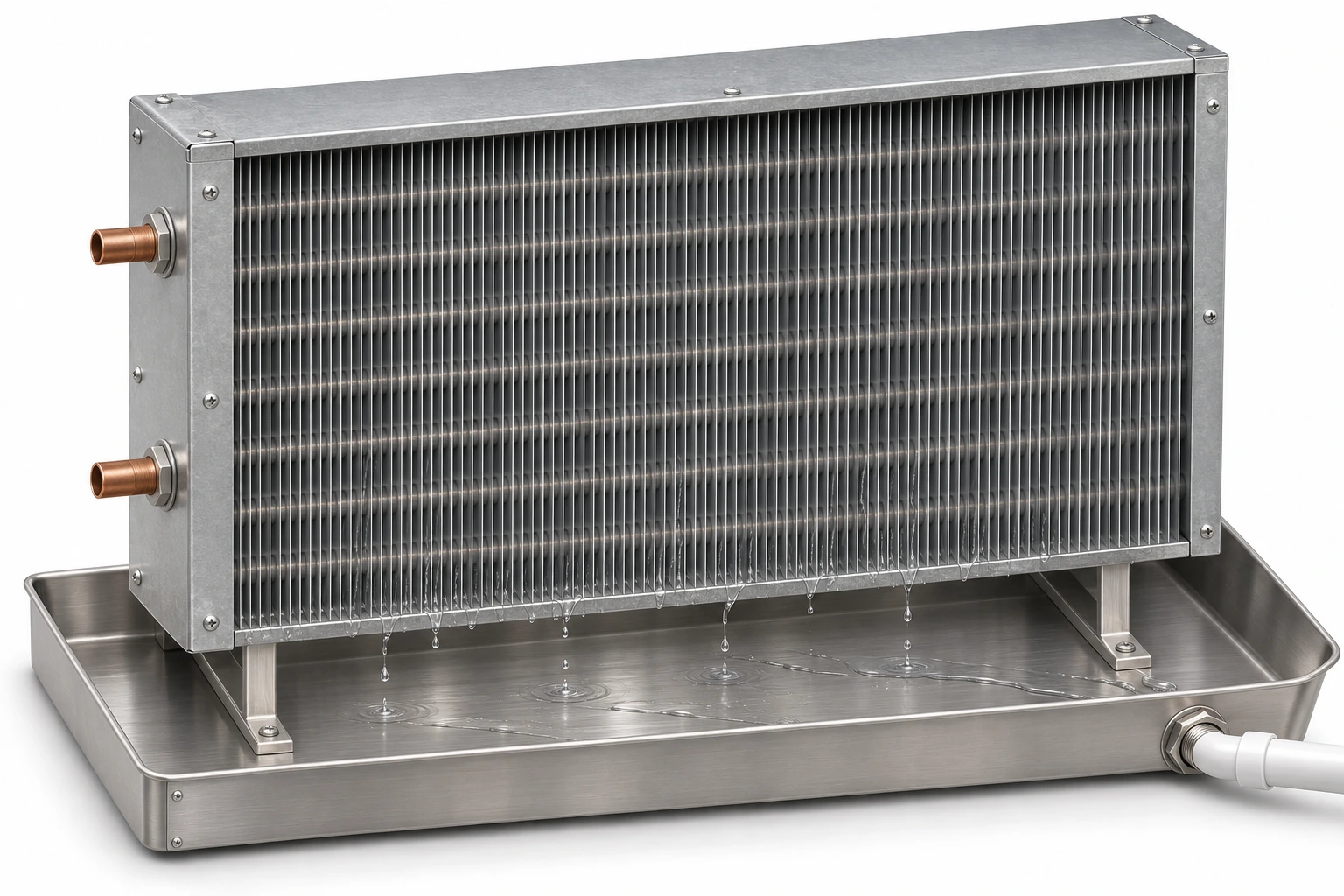
A cooling coil may collect moisture from the air. Cleaning the finned surface while leaving a dirty pan or obstructed drain does not address the complete moisture-management problem.
Include the condensate pan and drain path in the inspection. Standing water, debris, wet insulation, or evidence of overflow needs attention. Check drainage under the applicable equipment procedure; do not assume that water disappearing during rinsing proves that the system drains correctly during operation.
If there is suspected microbial contamination, the service scope may need to extend beyond routine coil washing. Moisture sources and affected adjacent materials must be assessed. Applying a fragrance, disinfectant, or foaming product is not a substitute for resolving the underlying moisture problem.
Heating coils need construction-specific care
Hot-water, steam, and hot-gas reheat coils also have air-side surfaces that can become dirty. Identify their materials and coatings just as carefully as those of a cooling coil.
Air-side cleaning is different from work inside the fluid or refrigerant passages. Water-side scale, steam-system problems, and internal refrigerant contamination require separate diagnosis and service procedures. This article does not prescribe internal chemical flushing or descaling.
Set the interval from conditions and instructions
Use the equipment and coating maintenance requirements as the baseline, then adjust inspection frequency to actual conditions. Outdoor debris, nearby construction, coastal exposure, industrial contamination, heavy operating hours, and filtration problems can all affect the maintenance plan.
Inspection and cleaning are different activities. A scheduled inspection can establish whether cleaning is needed, whether contamination is recurring quickly, or whether the problem requires another type of service. Coating requirements may still call for cleaning on a prescribed schedule even when the surface appears reasonably clean.
Keep a maintenance record: equipment identification, coil construction and coating if known, inspection date, observed contamination, products used, procedure followed, drainage findings, and any damage requiring follow-up. Before-and-after photographs help the next technician understand what changed.
Verify the result before returning to service
The service team should check the cleaned surfaces, address remaining deposits, remove temporary protections as required, and reinstall any access panels and guards that were removed. Restart the equipment only through its specified return-to-service procedure.
Evaluate operation after the system has stabilized. Compare relevant readings with appropriate operating conditions and previous records where available. Do not promise a fixed energy saving or capacity gain simply because a coil was washed.
If poor airflow or performance remains, continue the diagnosis. Repeating the same cleaning treatment will not correct a damaged coil, an unrelated equipment fault, or an unsuitable operating condition.
When cleaning is no longer enough
Request a condition assessment when inspection shows significant fin loss, persistent leakage, severe corrosion, damaged headers or tubes, or restrictions that cannot be resolved through the approved cleaning procedure. Cleaning may reveal damage that deposits previously concealed.
The decision to repair or replace should consider the condition of the assembly, service access, equipment requirements, and the feasibility of a durable repair. Appearance alone is not a complete condition assessment.
If a replacement is needed, use Coil Brief to document the existing coil’s dimensions, construction, and connections, or submit an existing drawing. Photos of the damaged areas can support the review. Confirm the proposed replacement details on the engineering drawing before production.
Coil Recall
Review the article’s main ideas, one card at a time.
Card 1 of 7